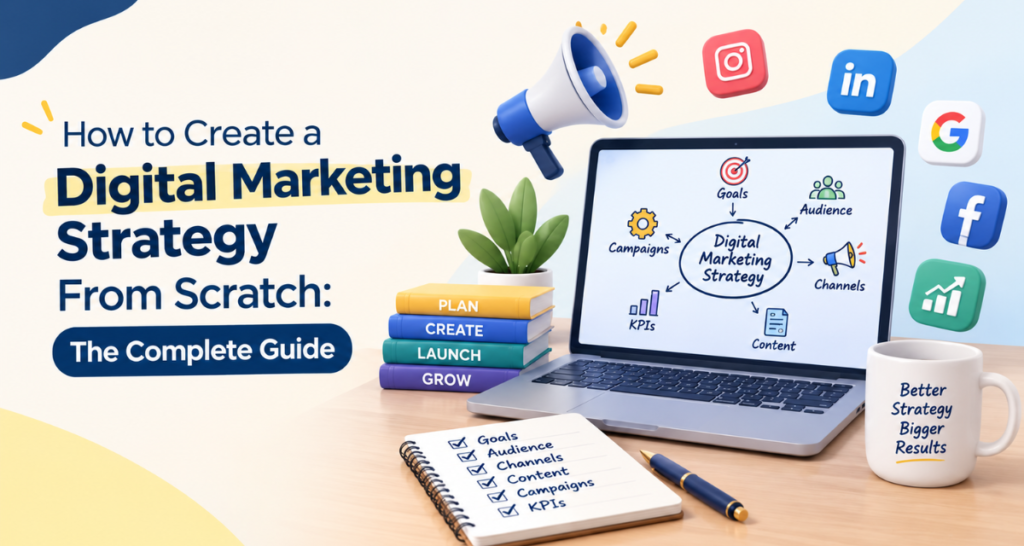
Digital marketing can help a business reach new customers, build brand awareness, and generate sales. But simply posting on social media or running advertisements does not guarantee results. Without a clear plan, businesses can easily waste time and money on activities that do not support their goals.
That is why knowing how to create a digital marketing strategy is important. A well-planned strategy connects your business goals with the right audience, marketing channels, content, campaigns, and measurable outcomes.
Whether you are starting from scratch or trying to improve your existing marketing efforts, the following steps can help you build a practical digital marketing strategy.
What Is a Digital Marketing Strategy?
A digital marketing strategy is a structured plan that explains how a business will use online channels to achieve specific marketing and business goals.
It is important to understand the difference between a strategy, campaign, and tactic.
A strategy is the overall direction. A campaign is a focused marketing initiative created to achieve a particular objective. Tactics are the individual actions used to execute that campaign.
For example, a business may want to generate more leads. Its strategy could involve SEO, content marketing, social media, and paid advertising. A campaign might promote a particular offer, while the ads, landing page, videos, and emails are the tactics used to support it.
Why Do You Need a Digital Marketing Strategy?

Marketing without a strategy can quickly become inconsistent and difficult to measure. A clear plan helps businesses make better decisions about where to invest their time, money, and resources.
A digital marketing strategy can help you:
- Set clear marketing priorities
- Understand your target customers
- Choose the right marketing channels
- Create more relevant content
- Use your marketing budget efficiently
- Measure meaningful results
- Identify what needs improvement
Instead of trying every new platform or trend, you can focus on activities that support your actual business objectives.
How to Create a Digital Marketing Strategy From Scratch

1. Define Your Business Goals
Before choosing a platform or creating content, determine what you want your marketing to achieve.
Your goal should be specific and measurable. For example, “get more customers” is too broad. A stronger goal would be “generate 50 qualified leads per month through online marketing.”
Depending on your business, your goals could include:
- Increasing website traffic
- Generating qualified leads
- Increasing online sales
- Building brand awareness
- Improving customer retention
- Increasing repeat purchases
Clear goals give your marketing efforts direction and make it easier to determine whether your strategy is working.
2. Identify Your Target Audience
One of the most important parts of how to create a digital marketing strategy is understanding exactly who you want to reach.
Your target audience is more than an age group or location. Consider their:
- Problems and pain points
- Interests
- Needs and expectations
- Purchasing behavior
- Online habits
- Reasons for choosing one brand over another
You can learn about your audience through customer conversations, surveys, website analytics, social media insights, and existing customer data.
For example, a local fitness business targeting busy professionals may create different messaging from a business targeting college students. Understanding this difference helps you create more relevant marketing.
3. Analyze Your Current Digital Presence
Before building something new, assess what you already have.
Review your:
- Website
- Search engine visibility
- Social media accounts
- Existing content
- Paid advertising
- Email marketing
- Competitor activity
Look for three things: what is working, what is underperforming, and where there are opportunities.
For example, if your website receives visitors but generates very few inquiries, the problem may not be traffic. Your website experience, messaging, offer, or conversion process may need improvement.
4. Choose the Right Digital Marketing Channels
You do not need to be everywhere.
The right channels depend on your audience, goals, budget, and customer journey. Common digital channels include:
- SEO
- Content marketing
- Social media
- Email marketing
- Google Ads
- Meta Ads
- Video marketing
For example, SEO may be useful for businesses that want to attract people actively searching for information or products. Social media may be more effective for visual brands that need to build awareness and engagement.
The goal is not to use the maximum number of channels. It is to select the channels where your audience is most likely to respond.
5. Plan Your Content
Understanding how to create content for digital marketing starts with knowing what your audience actually needs.
Instead of creating content simply to stay active, connect every piece of content to a purpose.
You could create:
- Blog posts
- Social media posts
- Short-form videos
- Guides
- Case studies
- Infographics
- Email newsletters
Think about the customer journey:
Awareness → Consideration → Conversion → Retention
For example, an educational blog post can help someone discover your brand. A comparison guide can help them evaluate their options. A case study or product demonstration can then support their buying decision.
When learning how to create content for digital marketing, focus on solving problems, answering questions, and demonstrating expertise rather than constantly promoting your business.
6. Learn How to Create a Digital Marketing Campaign
A strategy provides the bigger picture, while a campaign focuses on a specific objective.
If you want to understand how to create a digital marketing campaign, start with these steps:
- Define the campaign objective.
- Identify the target audience.
- Decide on the core message or offer.
- Choose the appropriate marketing channels.
- Create the required content and advertising assets.
- Set a realistic budget and timeline.
- Launch the campaign.
- Measure the results.
- Optimize based on performance.
For example, a local business could run a campaign designed to generate inquiries for a seasonal offer. The campaign could use Meta Ads, a dedicated landing page, short videos, and follow-up messages.
7. Set Your Marketing Budget
There is no single budget that works for every business.
Your budget should depend on your business goals, available resources, customer acquisition costs, and expected return.
Start with an amount you can realistically manage and track how different channels perform. Over time, you can allocate more resources to activities that consistently contribute to your goals.
Avoid spending money simply because a competitor is spending more. A smaller, well-measured campaign can be more useful than a large campaign without proper tracking.
8. Define Your KPIs
A strategy is difficult to improve if you do not know what success looks like.
Choose key performance indicators (KPIs) that connect directly to your goals.
Depending on your objective, you might track:
- Website traffic
- Leads
- Conversion rate
- Cost per lead
- Customer acquisition cost
- Click-through rate
- Sales
- Return on ad spend
- Customer lifetime value
Do not focus only on likes, followers, or impressions. These numbers can provide useful context, but business outcomes such as qualified leads, sales, and revenue are often more important.
9. Test, Measure, and Improve
Digital marketing is not a “set it and forget it” process.
Once your strategy is active, regularly review your results. Identify which channels, content, messages, and campaigns are producing the strongest outcomes.
You can test different:
- Headlines
- Ad creatives
- Offers
- Calls to action
- Landing pages
- Audience segments
- Content formats
The goal is continuous improvement. Your first strategy does not need to be perfect. It needs to give you a clear starting point and enough data to make better decisions.
Common Digital Marketing Strategy Mistakes to Avoid

Even a well-planned strategy can fail if businesses make avoidable mistakes.
Some common mistakes include:
- Trying to use every social media platform
- Starting without clear goals
- Not researching the target audience
- Creating content without a purpose
- Focusing only on followers and likes
- Spending on ads without tracking conversions
- Copying competitors without understanding their customers
- Never reviewing marketing performance
The best approach is to start with your business objective and work backward to determine the audience, channels, content, campaigns, and metrics you need.
Final Thoughts
Knowing how to create a digital marketing strategy is less about following every marketing trend and more about creating a clear system.
A strong strategy connects:
Business Goals → Target Audience → Marketing Channels → Content → Campaigns → KPIs → Optimization
Start with realistic goals, understand your audience, choose the channels that make sense for your business, and consistently measure what happens.
If you want to explore more practical digital marketing insights and strategies, visit Social Setu.
Frequently Asked Questions
What is a digital marketing strategy?
A digital marketing strategy is a plan for using online channels such as search engines, social media, content, email, and paid advertising to achieve specific business and marketing goals.
How do I create a digital marketing strategy for a small business?
Start by defining your business goals, identifying your target audience, auditing your existing online presence, choosing relevant channels, planning content, setting a budget, and deciding which KPIs you will use to measure success.
What is the difference between a digital marketing strategy and a campaign?
A strategy is the overall marketing plan, while a campaign is a focused initiative designed to achieve a specific objective within that strategy. Multiple campaigns can operate under one digital marketing strategy.
How often should I review my digital marketing strategy?
Review your performance regularly and conduct a more detailed strategic review every few months. The exact frequency depends on your business, marketing channels, campaign duration, and the amount of performance data available.
How do I create a digital marketing campaign?
Define a specific objective, identify your audience, develop the campaign message and offer, select appropriate channels, create your assets, establish a budget and timeline, launch the campaign, and measure and optimize its performance.